If you’re planning to invest in solar energy, one of the first questions you’ll encounter is:
Should I install an on-grid solar system or a hybrid solar system?
It’s a valid question, and the answer isn’t always straightforward.
Both systems generate clean electricity from the sun, reduce your electricity bills, and increase the value of your property. However, they are designed for different needs. Choosing the wrong system can either leave you paying more than necessary or without the backup power you expected.
This guide explains the differences between on-grid and hybrid solar systems in detail, helping you decide which one is the best fit for your home or business.
Understanding the Basics
Before comparing them, it’s important to understand what each system does.
What Is an On-Grid Solar System?
An on-grid solar system, also called a grid-tied solar system, is directly connected to your local electricity grid.
During the day, your solar panels generate electricity that powers your home or business. If your solar system produces more electricity than you’re using, the surplus is exported to the utility grid through net metering.
At night or during periods of low solar generation, electricity is automatically imported from the grid.
One important thing to remember is that an on-grid solar system does not have battery storage. If the grid goes down, the solar system automatically shuts off for safety reasons.
What Is a Hybrid Solar System?
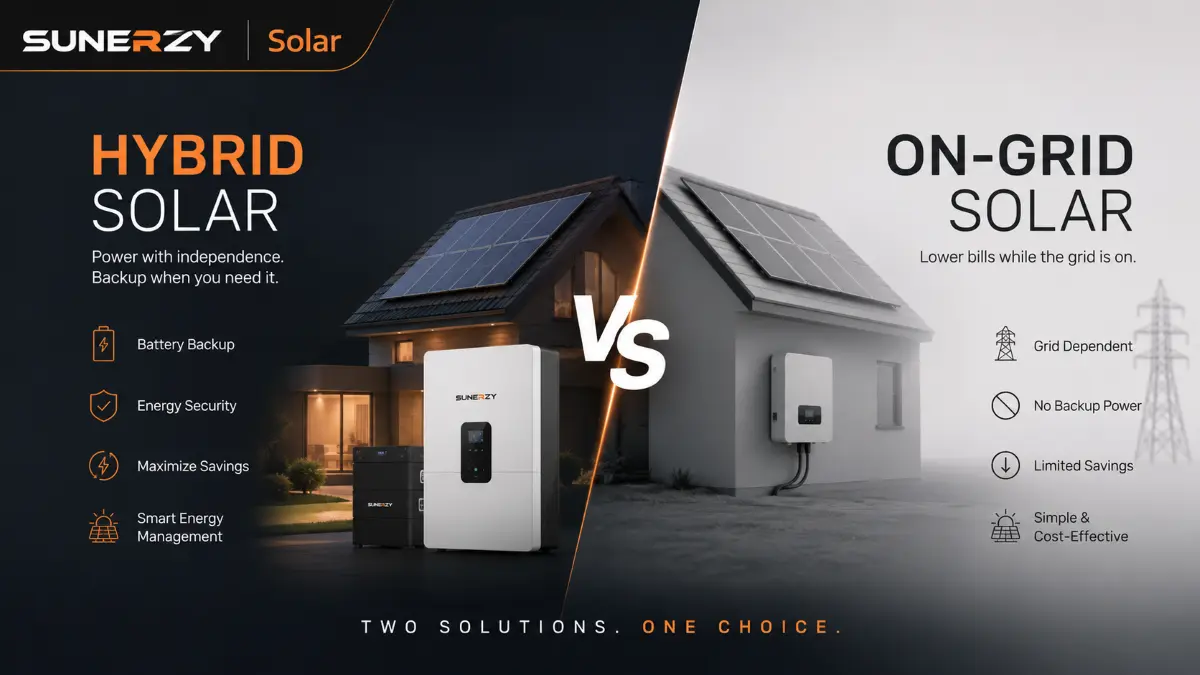
A hybrid solar system combines solar panels, battery storage, and grid connectivity.
Like an on-grid system, it powers your property using solar energy during the day. However, instead of sending all excess electricity to the grid, it can also store that energy in batteries.
When the sun goes down or the grid experiences a power outage, the batteries automatically supply electricity to your essential appliances.
In simple terms, a hybrid system gives you both lower electricity bills and backup power.
The Core Difference
The biggest difference comes down to battery storage.
An on-grid system depends entirely on the electricity grid whenever solar production isn’t enough.
A hybrid system stores extra solar energy in batteries, allowing you to use your own electricity even when the grid is unavailable.
Everything else, including cost, maintenance, and return on investment, stems from this single difference.
Comparing On-Grid and Hybrid Solar Systems
1. Installation Cost
For most homeowners, cost is the first consideration.
On-Grid Solar
An on-grid system is significantly more affordable because it doesn’t require batteries.
The primary components include:
- Solar panels
- Solar inverter
- Mounting structure
- Net meter
- Wiring and protection equipment
Since batteries are the most expensive part of any solar installation, eliminating them greatly reduces the overall investment.
Hybrid Solar
Hybrid systems include all the components of an on-grid system plus:
- Battery bank
- Hybrid inverter
- Battery management system
These additional components increase the initial installation cost.
Winner: On-Grid Solar
If your primary goal is reducing electricity bills with the lowest upfront investment, an on-grid system offers the best value.
2. Electricity Bill Savings
Both systems help reduce electricity costs, but they do so differently.
On-Grid Solar
An on-grid system generates electricity during the day and exports surplus energy through net metering.
For areas with favorable net metering policies, this can dramatically lower your monthly electricity bills.
Hybrid Solar
Hybrid systems also reduce electricity bills but prioritize storing excess solar energy before exporting it.
Instead of purchasing electricity from the grid at night, you use the energy stored in your batteries.
This increases your self-consumption of solar energy.
Winner: Tie
Both systems offer excellent savings. The better option depends on your electricity usage pattern and local utility policies.
3. Power Backup During Outages
This is where the biggest difference appears.
On-Grid Solar
When the electricity grid fails, the solar system also shuts down.
Many people assume solar panels will continue powering their homes during a blackout. Unfortunately, that’s not how on-grid systems work.
The inverter disconnects automatically to protect utility workers repairing the power lines.
Hybrid Solar
Hybrid systems continue supplying electricity using battery storage.
Essential appliances like:
- Lights
- Fans
- Wi-Fi
- Refrigerators
- Computers
- Security systems
can continue operating even during long power cuts.
Winner: Hybrid Solar
4. Maintenance Requirements
On-Grid Solar
Maintenance is relatively simple.
Regular cleaning of solar panels and occasional inspections are usually sufficient.
Since there are no batteries, maintenance costs remain low.
Hybrid Solar
Hybrid systems require similar maintenance for the panels, along with periodic monitoring of battery health.
Modern lithium batteries require very little maintenance, but they still have a limited lifespan and may eventually need replacement.
Winner: On-Grid Solar
5. Return on Investment
On-Grid Solar
Because installation costs are lower, on-grid systems generally recover their investment faster.
Many homeowners recover their costs within a few years through electricity bill savings.
Hybrid Solar
Hybrid systems take longer to recover their investment because batteries increase the initial cost.
However, the added benefit of uninterrupted electricity can be invaluable for many users.
Winner: On-Grid Solar
6. Energy Independence
On-Grid Solar
Although you generate your own electricity during the day, you’re still dependent on the utility grid at night and during outages.
Hybrid Solar
Hybrid systems provide much greater energy independence.
You can continue using your own stored solar energy even after sunset or during grid failures.
Winner: Hybrid Solar
7. Best Applications
On-Grid Solar Is Ideal For:
- Homes with reliable electricity supply
- Businesses that operate primarily during the daytime
- Offices
- Schools
- Commercial buildings
- People looking for maximum savings at the lowest cost
Hybrid Solar Is Ideal For:
- Areas with frequent power cuts
- Hospitals and clinics
- Hotels
- Factories
- Homes requiring uninterrupted power
- Businesses where downtime results in financial losses
Which System Is Better for Indian Homes?
For most urban households with reliable electricity, an on-grid solar system is usually the most economical option.
It offers:
- Lower installation costs
- Excellent return on investment
- Significant reduction in electricity bills
- Minimal maintenance
However, if your locality experiences regular power outages or you rely on continuous electricity for work, medical equipment, or business operations, investing in a hybrid solar system can provide peace of mind that goes far beyond monthly savings.
Common Myths
“Hybrid systems always save more money.”
Not necessarily.
If your area has stable electricity and favorable net metering, an on-grid system may actually provide a better financial return because of its lower installation cost.
“Solar panels work only when it’s sunny.”
Solar panels continue generating electricity on cloudy days, although at reduced efficiency.
“Batteries last forever.”
No battery lasts indefinitely.
Modern lithium-ion batteries generally last many years, but they will eventually require replacement depending on usage and manufacturer specifications.
How to Decide
Ask yourself these questions before making a decision:
Choose an On-Grid Solar System if:
- Your electricity supply is generally reliable.
- Your main goal is reducing electricity bills.
- You want the lowest installation cost.
- You don’t require backup power during outages.
-
You want the fastest return on investment.
Choose a Hybrid Solar System if:
- Your area experiences frequent or extended power cuts.
- You need uninterrupted electricity for your home or business.
- You want greater energy independence.
- You’re willing to invest more upfront for long-term reliability.
- You want the flexibility of both battery storage and grid connectivity.
The Bottom Line
There is no universal “best” solar system. The right choice depends entirely on your energy needs, budget, and the reliability of your local electricity supply.
If your priority is maximum savings with minimum investment, an on-grid solar system is the clear winner.
If your priority is continuous power, energy security, and long-term independence from the grid, a hybrid solar system is worth the additional investment.
The good news is that both options reduce your electricity bills, lower your carbon footprint, and increase the value of your property. The key is choosing a system that’s designed around your specific needs rather than simply opting for the cheapest or most advanced option.
Let Us Help You Choose the Right Solar Solution
Every home and business has unique energy requirements. Selecting the right solar system involves evaluating your electricity consumption, budget, roof space, backup needs, and future energy goals.
Our team can help you assess your requirements and recommend the ideal solution, whether it’s an on-grid or hybrid solar system. From consultation and system design to professional installation and after-sales support, we provide complete end-to-end solar solutions.
Get in touch with us today, and let us help you install the perfect solar system for your home or business.