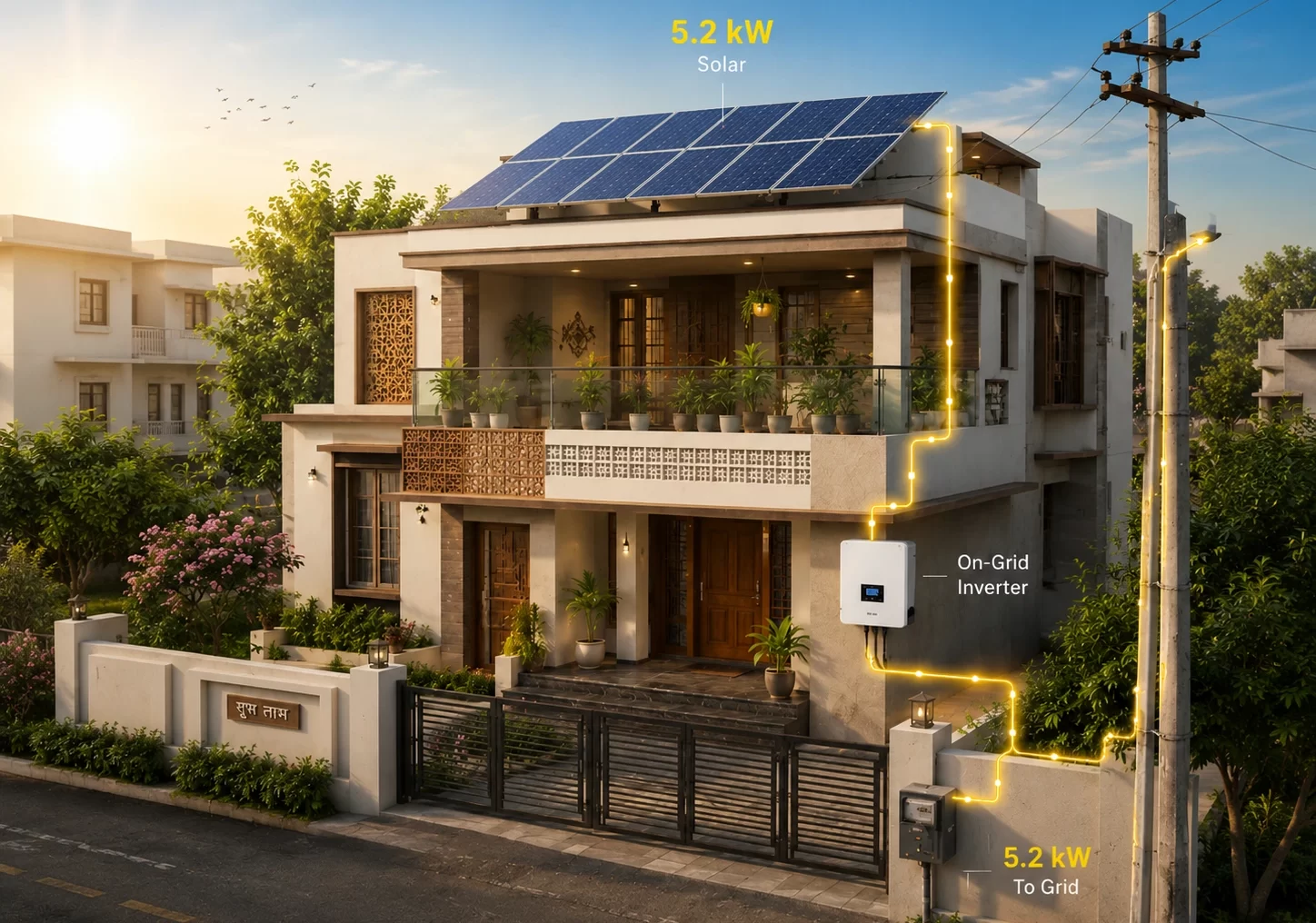
Electricity has become an essential part of our daily lives, but rising power tariffs continue to increase the burden on homeowners and businesses alike. At the same time, the world is shifting toward cleaner and more sustainable energy sources. This is where on-grid solar systems have emerged as one of the smartest and most cost-effective energy solutions.
An on-grid solar system not only helps reduce your electricity bills but also contributes to a greener future without requiring expensive battery storage. If you’re planning to switch to solar energy, understanding how an on-grid system works can help you make the right investment.
What Is an On-Grid Solar System?
An on-grid solar system, also known as a grid-tied solar system, is connected directly to your local electricity grid. During the day, solar panels generate electricity from sunlight, which is converted into usable AC power by a solar inverter.
The electricity produced is first used to power your home or business. If your solar panels generate more electricity than you consume, the excess energy is exported back to the utility grid through a bidirectional meter. When your solar system isn’t producing enough electricity, such as during the night or cloudy weather, power is automatically drawn from the grid.
This seamless switching ensures a continuous electricity supply without any manual intervention.
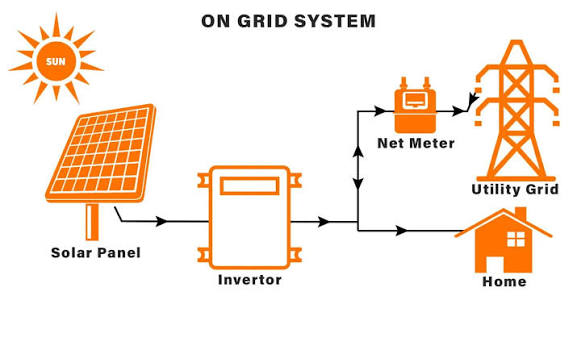
How Does an On-Grid Solar System Work?
An on-grid solar system consists of several key components working together:
- Solar Panels: Capture sunlight and convert it into DC electricity.
- Solar Inverter: Converts DC electricity into AC electricity used by household appliances.
- Net Meter (Bidirectional Meter): Measures both the electricity consumed from the grid and the surplus electricity exported to it.
- Utility Grid: Acts as your backup power source whenever solar generation is insufficient.
During sunny hours, your property primarily runs on solar power. Any extra energy generated is sent to the grid, earning you credits depending on your local net metering policy.
Benefits of Installing an On-Grid Solar System
1. Significant Reduction in Electricity Bills
One of the biggest advantages of an on-grid solar system is the savings on monthly electricity costs. Since your property uses solar energy during daylight hours, your dependence on grid electricity decreases substantially.
For many households and commercial buildings, this translates into thousands of rupees saved every year.
2. Lower Initial Investment
Unlike off-grid systems, on-grid solar systems do not require battery storage. Batteries are among the most expensive components of a solar installation.
Without batteries, installation costs are considerably lower while maintenance is also reduced.
3. Net Metering Benefits
Most electricity boards offer net metering, allowing you to export surplus electricity to the grid. The exported units are adjusted against your electricity consumption, helping lower your final electricity bill even further.
4. Environmentally Friendly
Solar power is a clean, renewable source of energy. By generating electricity from sunlight, you reduce your dependence on fossil fuels and significantly lower your carbon footprint.
Installing solar is not just a financial decision. It’s an investment in a cleaner environment for future generations.
5. Long-Term Returns
Modern solar panels typically have a lifespan of 25 years or more. Once the installation cost is recovered, the electricity generated is essentially free for many years, providing an excellent return on investment.
Is an On-Grid Solar System Right for You?
An on-grid solar system is ideal if:
- You have regular access to the utility electricity grid.
- Your electricity bills are consistently high.
- You want maximum savings with minimum maintenance.
- You don’t require battery backup during power outages.
- Your rooftop receives good sunlight throughout the year.
For most urban homes, offices, schools, hospitals, and commercial establishments, an on-grid solar system is often the most practical choice.
Things to Consider Before Installation
Before installing an on-grid solar system, it’s important to evaluate:
- Available rooftop space
- Daily electricity consumption
- Roof orientation and shading
- Local net metering regulations
- Quality of solar panels and inverter
- Experience of the installation company
Choosing high-quality components and professional installation ensures better performance, safety, and long-term reliability.
Common Misconceptions About On-Grid Solar
“Solar doesn’t work on cloudy days.”
Solar panels continue generating electricity even on cloudy days, although at a lower efficiency than bright sunny conditions.
“Solar systems require constant maintenance.”
Modern solar systems require very little maintenance. Periodic cleaning of panels and routine inspections are generally sufficient.
“Installing solar is too expensive.”
With government incentives, financing options, and rapidly falling equipment prices, solar has become more affordable than ever. The savings on electricity bills often recover the installation cost within a few years.
The Future Is Solar
As electricity prices continue to rise and sustainability becomes increasingly important, on-grid solar systems offer one of the smartest long-term investments for both residential and commercial properties.
They provide clean energy, substantial savings, low maintenance, and excellent returns over their lifetime. Whether you’re looking to reduce operational costs or contribute to a greener future, switching to solar is a decision that benefits both your finances and the environment.
Ready to Make the Switch?
If you’re considering installing an on-grid solar system, team Sunerzy is here to help. From site assessment and system design to professional installation and after-sales support, we provide complete end-to-end solar solutions tailored to your energy needs.
Get in touch with us today, and let us help you install a reliable, efficient, and high-quality on-grid solar system for your home or business.